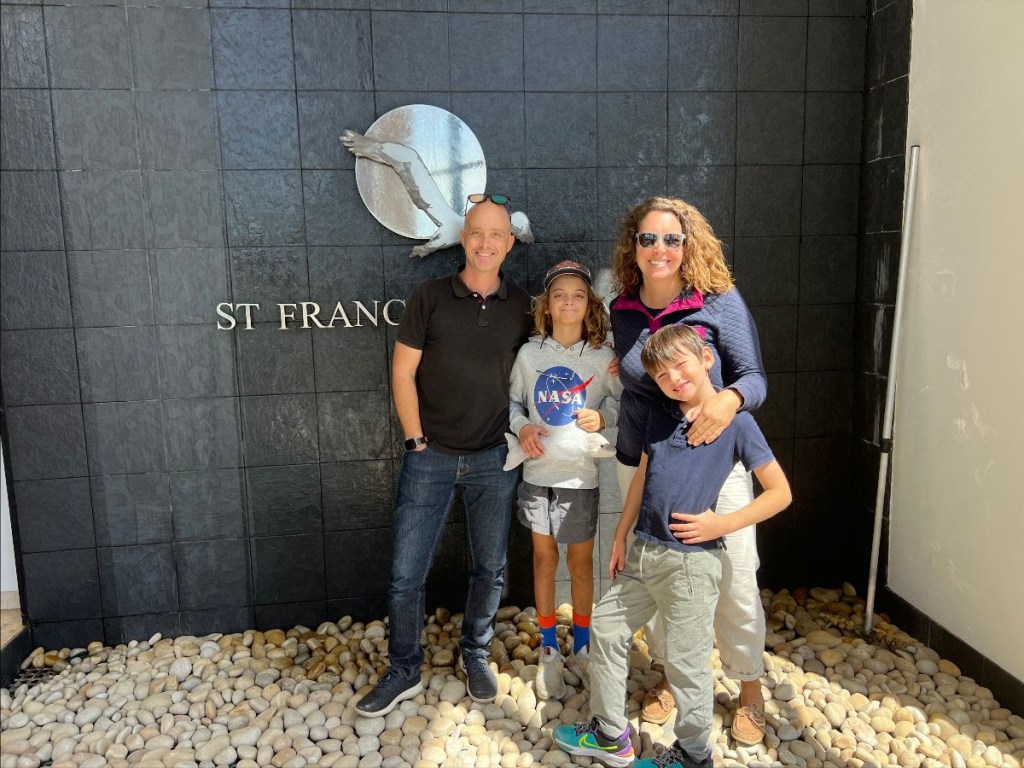
Our boat, a St. Francis 50, is a South African-built catamaran. They are a semi-custom niche catamaran builder that are still building boats. As a smaller outfit, they produce far fewer boats per year than bigger manufacturers. For instance, our boat, hull #5, was built in 2007. The most recent SF 50 was launched last year, hull #31. The company is based out of St. Francis, South Africa, and the boats are launched from a tiny harbor in St. Francis Bay. It’s a private, commercial harbor with few slips available and not a typical stop along the way to Cape Town. Happily, when we reached out to St. Francis to ask about the possibility of stopping and visiting the factory, their slip was available for a couple of days—and they said they’d be happy to host us for a tour.
Yesterday, we rolled into the bay after a 24-hour passage to find 2-3 meter swell periodically breaking at the entrance to the harbor. Yikes. The harbormaster had instructed us to wait until 8 am so that workers could guide us to our spot. While we waited till the appointed time, we watched the sets of waves to decide whether this was worth attempting. Every few minutes, following the large sets, smaller swell rolled through without breaking waves. When we spoke to the harbormaster at 8 am, he told us he was going to send out the NSRI boat, essentially the South African coast guard to guide us in. Oh boy. This was going to be an experience. Their advice was essentially what we’d already observed—wait between sets and then hammer down. Which is exactly what we did. Safely into the harbor, we were guided to the St. Francis slip, the same one where our boat was berthed when it was launched in 2007. We haven’t completed a circumnavigation, but it felt pretty special to bring our boat back here and know that it’s now completed it’s first circumnavigation. We toasted to it that night with glasses of bubbly, at the restaurant overlooking the launch bay where it was rolled down into the water for the first time.
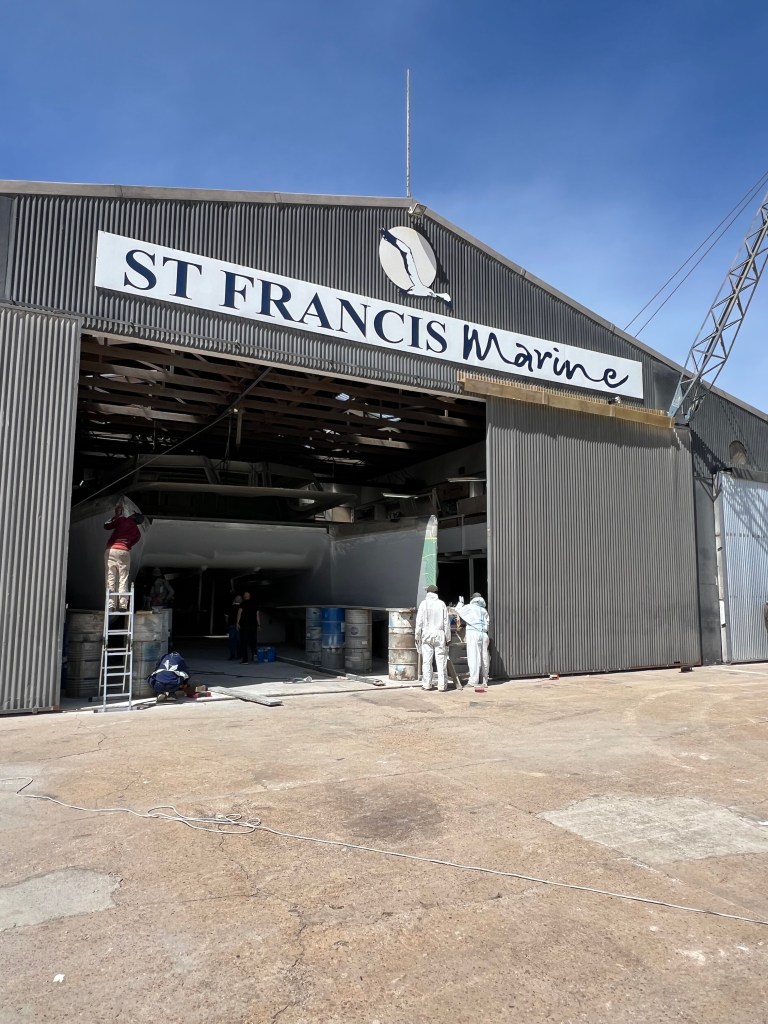
The next morning, we headed to the factory for a tour with Rob Brennan, a longtime boat builder and the COO of St. Francis. The company is now building a new boat, a St. Francis 46. The first one was recently launched and they are in the process of building four more. They’re also building two new SF 500s, the next evolution of our SF 50. Walking through the roughed in 500, it felt familiar to our boat, but with more updated, modern lines—as much as we could imagine it anyway (below left). It is still months away from being completed. The next boat to be completed will be a 46 which will launch in late January and it was easier to see how the interior differed from ours.
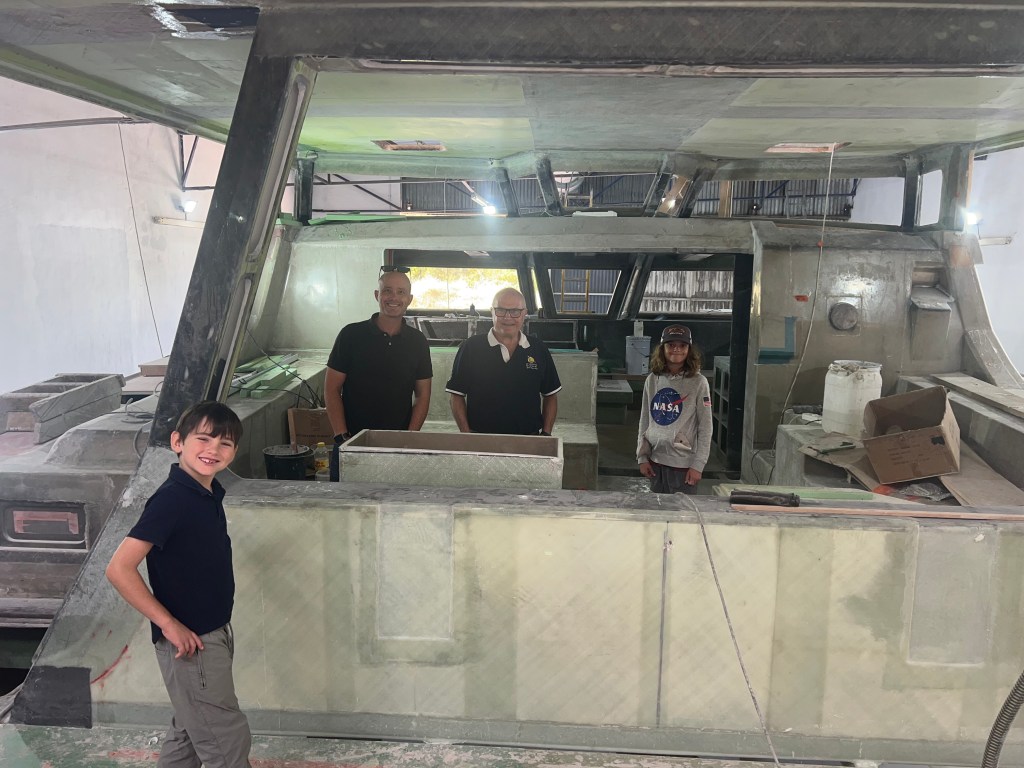
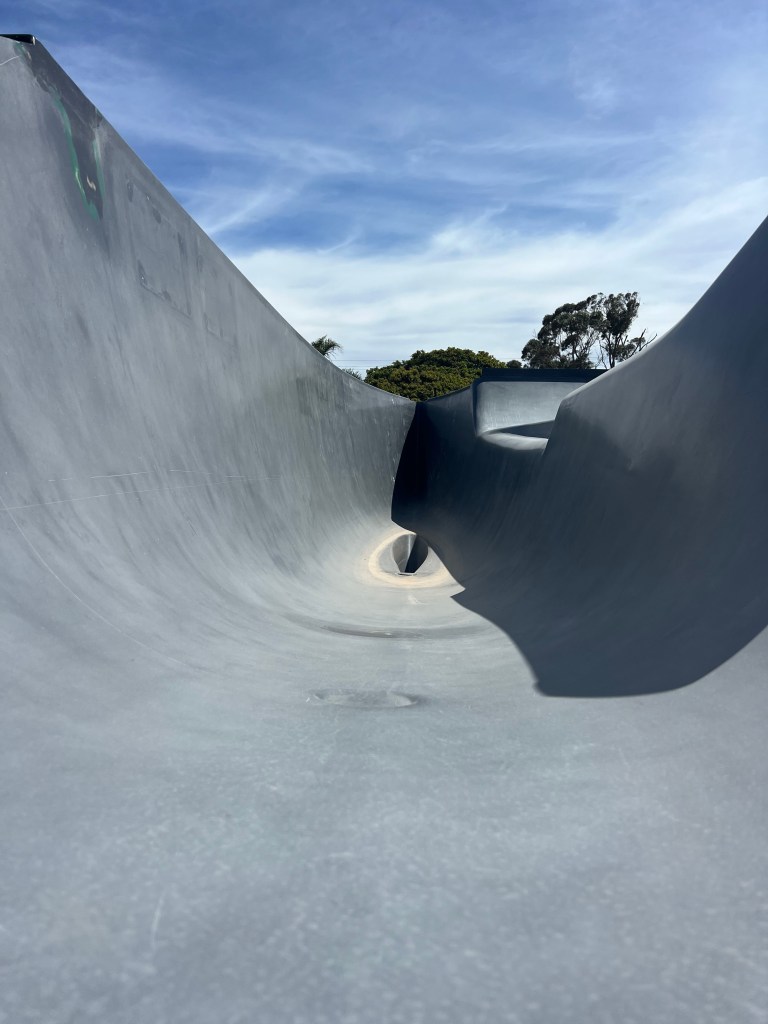
It was so exciting to walk through the factory, see the way the boats are built, and to see the many similarities that still exist as the design of the boat has evolved—even how many fixtures and fittings are identical to ones we have. One of the coolest things was to see the mold for the hull (above right), the exact same one used for our boat. While the areas from the rub rail up have changed, the hulls of the new boats remain the same as ours.
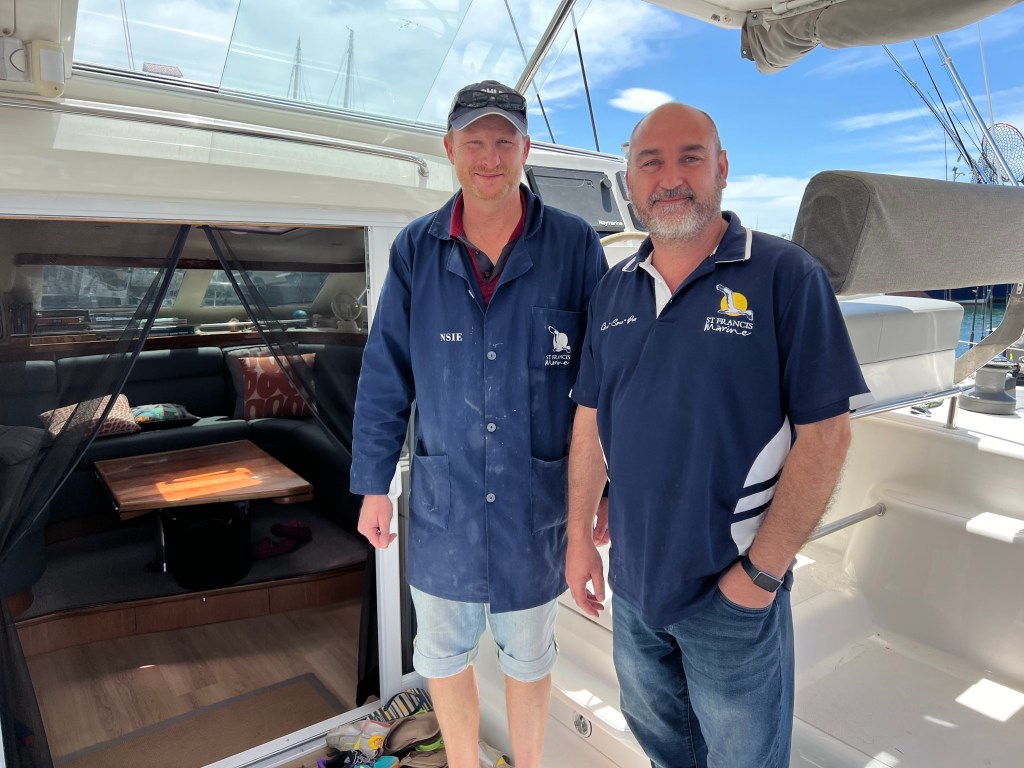
A final thrill was meeting some of the long-time employees who oversee almost everything involved in the builds and were part of the team that built our boat. We invited them to come visit the boat if they wanted to see it again and two of them popped down later in the morning—Anton Swanepoel has been with SF for 24 years and Hansie Vermaak for 23 years (below). It was fun to see their reactions as they reminisced and poked through the boat, noting the changes compared to the modern boats. They said they’ve seen very few boats again once they were launched and headed off with the new owners. It made them happy to see ours and take a trip down memory lane. Our boat has lots of cherry wood throughout the interior and Anton told us that he was responsible for all of it, having been in charge of woodwork at the time. We talked with Hansie about a couple of niggling issues we were having and with his understanding of the boat and its systems, he was able to give us advice on how to solve them.
It’s easy to get attached to your boat, especially when it’s safely carrying you and your family across oceans. After two years and 20,000 miles, we’re certainly attached to ours. This was a very memorable stop for us. We’re grateful we got the chance to see our boat’s birthplace and meet some of the craftsmen who built it.

 SAILING SV ATLAS
Leave a comment