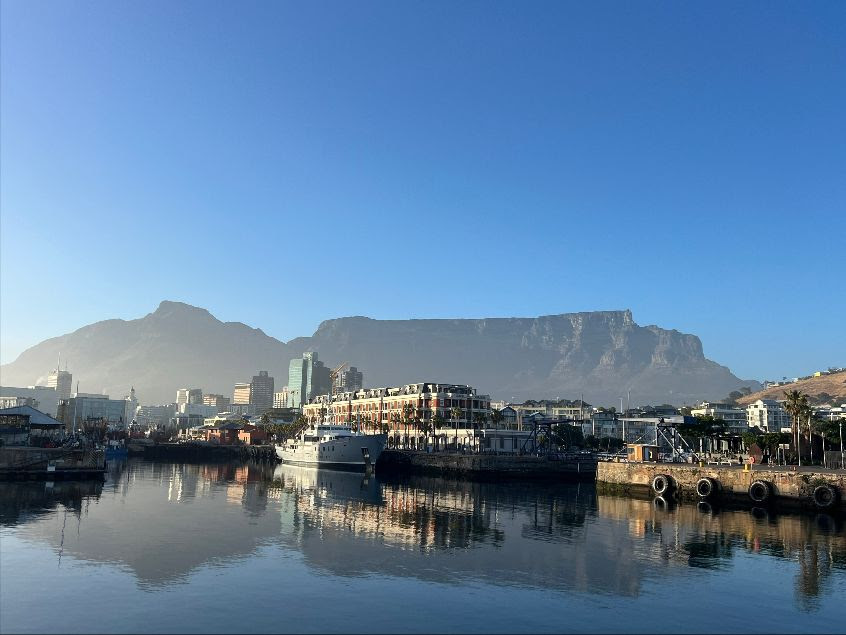
We’re back in the Atlantic! After two short days at St. Francis Bay, we had a weather window to make it the remaining 350 nm to Cape Town. We would have loved to spend another couple of days there, but not leaving when we did meant risking at least another week in St. Francis, as winds were forecast to blow 50+. This was a tough one, as we really liked it there. The village was small and charming. The people were incredibly welcoming, and we could easily walk along the shore to a beautiful national park with stunning sand dunes and views. Alas, the weather said we must go.
After our rollicking entry to the harbor with a NSRI escort, our departure was the exact opposite. The water was calm, the wind had dropped and we motored out into virtually no swell. Which was not the case once we got out of the bay and around the corner, where we were greeted by a sloppy 2-3 meter leftover swell. We expected to motor for the first 8 hours or so, after which we were forecast to have building wind from behind us up to 35 knots. We were warned by multiple locals who had traversed this stretch of coast that we should be no further offshore than 2-3 nm once we reached Cape Agulhas to avoid the worst of the katabatic winds, and even so, to expect 10-15 knots more than forecast.
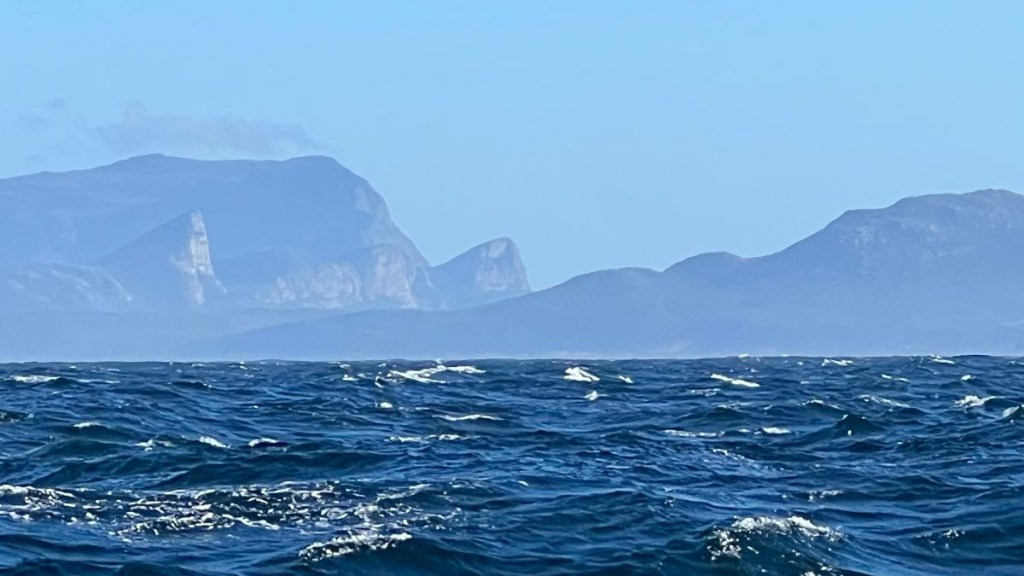
Our first 30 hours or so passed uneventfully—the biggest issue was the sheer amount of ship traffic, which rivaled the Malacca Strait in time spent altering course to avoid getting too close. It was also COLD! Some of the coldest weather we’ve sailed in since New Zealand. We wore multiple layers under our foul weather gear and used disposable hand and foot warmers on our watches. Just after sunset on our second day, we rounded Cape Agulhas. Though less dramatic in appearance than the better known Cape of Good Hope (above), Agulhas is the southernmost tip of the African continent, and at 20 degrees east, it is the dividing line between the Indian Ocean and the Atlantic Ocean. We all gathered at the helm together to watch our location countdown on the MFD and cheered when we officially crossed back into the Atlantic, bidding farewell to the Indian Ocean.
Whether it was staying close to shore or just lucky with milder winds, we never saw more than 30 knots, lower than forecast. We had an easy—but still cold—night and were greeted at dawn by the imposing Cape of Good Hope in the distance. It was a beautiful sight. To be rounding one of the infamous capes, with warm sunshine and blue skies above, knowing that we were just hours from making it to Cape Town—it was an incredible memory and one that I’ll treasure from this adventure.
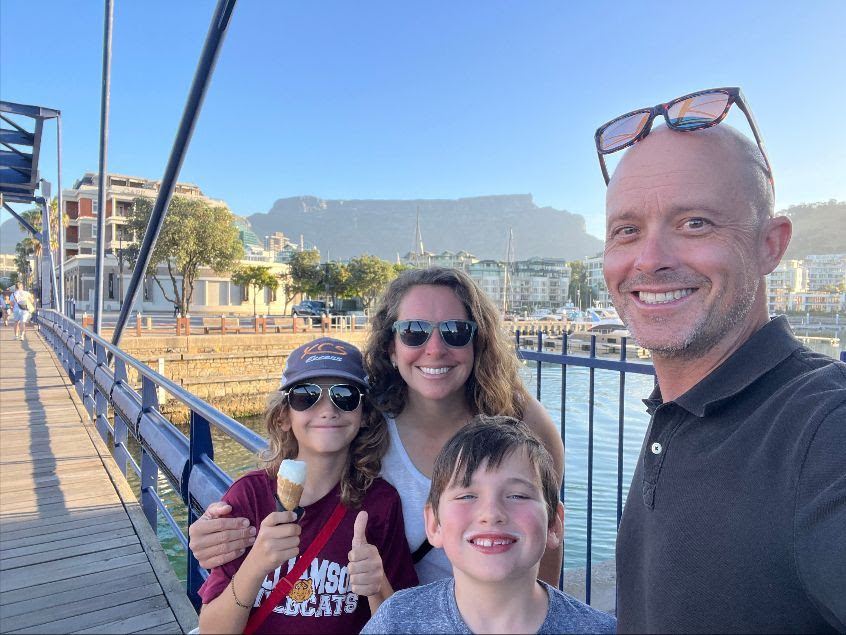
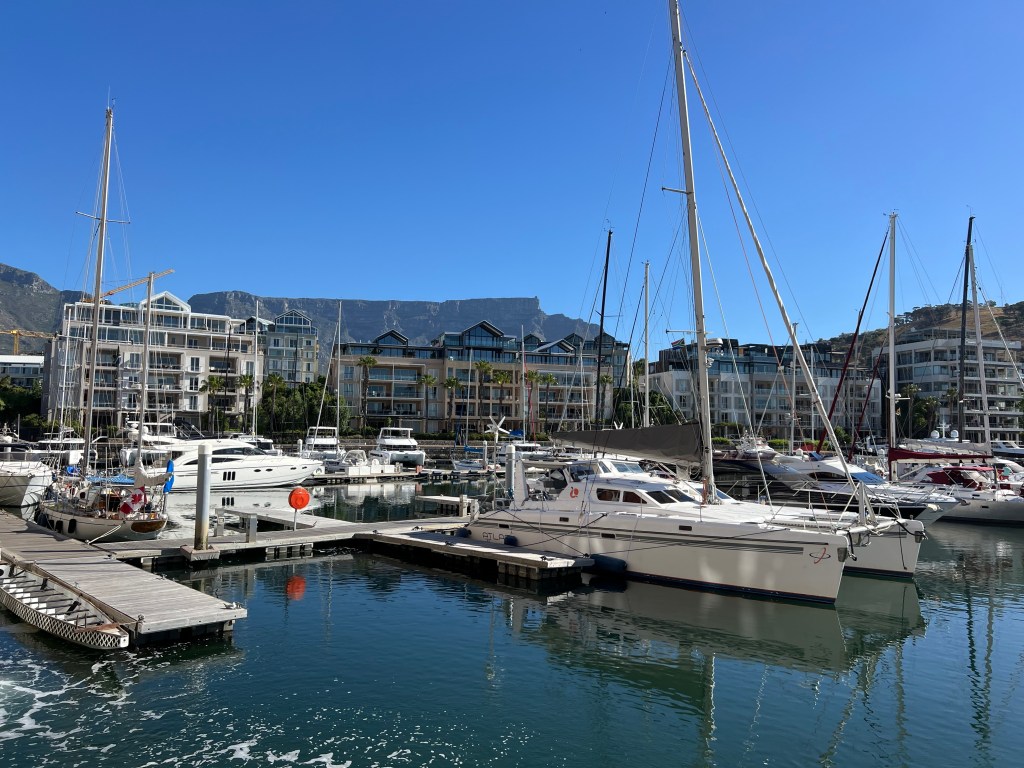
By lunchtime, we were tied up at our dock, at the foot of Table Mountain (above, right). For the first time, I felt a real sense of elation about all the months and miles behind us. I had expected to feel this after our 11-day passage back in July, when we sailed the bulk of the miles across. But when we arrived to Rodrigues, the distance ahead of us still felt formidable. Now, we really were done. The beauty and warmth of Cape Town have been the perfect capper to this final leg. We will be here until early December, when we’ll leave for Namibia and the first leg of our Atlantic crossing. So far, it’s been a great place to rest up and we’re looking forward to a restorative couple of weeks ahead.


 SAILING SV ATLAS
Leave a comment